無料体験はこちら

 PC・スマホで24時間レッスン可能レッスン回数は無制限英語4技能試験への対策も充実


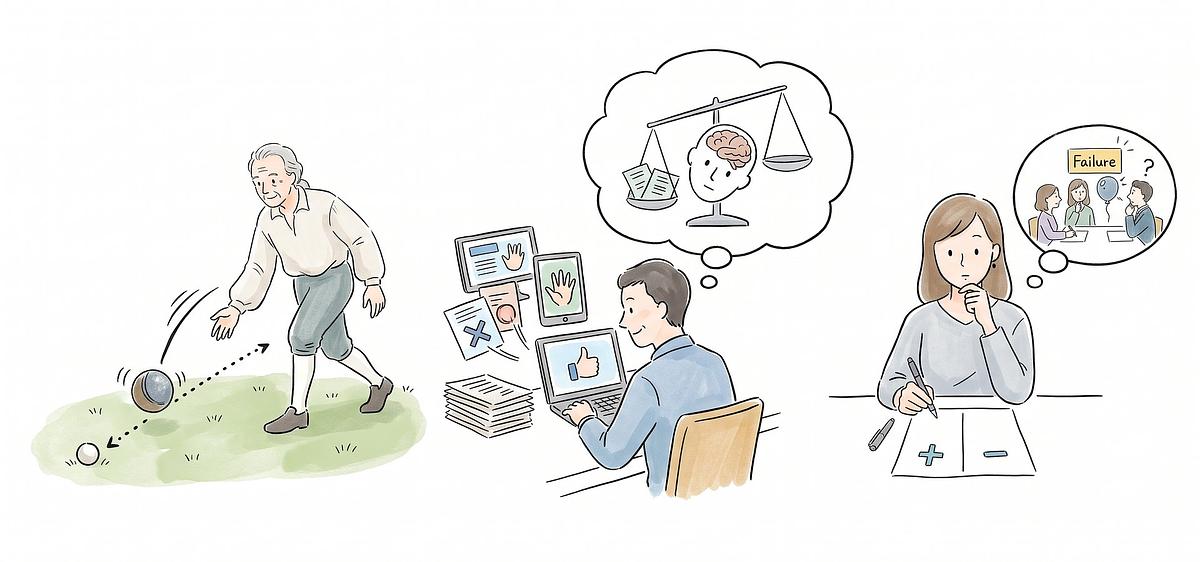
The word "bias" entered English through French in the 16th century. It may come from Old Provençal "biais," meaning "oblique," or slanting, but its origin is uncertain. Lawn bowls, a game in which players roll balls toward a target, has been played in Britain since at least the 13th century. Later, unevenly weighted balls curved as they rolled. This uneven weight was called "bias." Over time, it came to describe people's tendencies and unfair judgment.
「バイアス(bias)」という言葉は、16世紀にフランス語を通じて英語に入ってきました。「斜めの」を意味する古プロヴァンス語の「biais」に由来する可能性がありますが、その語源ははっきりしていません。ローンボウルズは、目標に向かってボールを転がす球技で、イギリスでは少なくとも13世紀から行われてきました。その後、重さに偏りがあり、転がると曲がるボールが使われるようになりました。この重さの偏りが「バイアス」と呼ばれました。やがて、この言葉は人の考え方や好みの傾向、不公平な判断も表すようになりました。
One common example is confirmation bias. We tend to notice information that supports our beliefs and ignore information that challenges them. Online, people often click on articles confirming their beliefs. This habit can create a one-sided view and lead to poor choices. Research shows that people may do this without realizing it. Because we focus on information that supports our beliefs, we may feel confident even when we have incomplete information.
よく知られた例の一つが「確証バイアス」です。私たちは自分の考えを裏付ける情報に目を向け、それに反する情報を無視してしまう傾向があります。ネットでは、自分の考えを肯定する記事をクリックしがちです。こうした習慣によって物事を一面的に捉え、不適切な判断をしてしまうことがあります。研究によると、人は自分でも気づかないうちに、このような行動を取ることがあります。自分の考えを裏付ける情報に注目するため、情報が不十分でも自信を持ってしまうことがあるのです。
We cannot erase bias, but we can manage it. One method is "consider the opposite." When making a decision, write down reasons your first idea might be wrong. This reveals overlooked facts. Another method is the "pre-mortem," popularized by psychologist Gary Klein. Before starting a project, imagine that it has already failed and think about why. This helps teams discuss risks openly. Both methods help us question our first ideas before making decisions.
バイアスをなくすことはできませんが、対処することは可能です。一つは「逆の可能性を考える」という方法です。何かを決めるとき、最初の考えが間違っているかもしれない理由を書き出します。これにより、見落としていた事実に気づきやすくなります。もう一つは、心理学者ゲーリー・クラインが広めた「プレモーテム」という方法です。プロジェクトを始める前に、すでに失敗したと想像し、その原因を考えます。この方法は、チームがリスクについて率直に話し合うのに役立ちます。どちらの方法も、判断を下す前に最初の考えを見直すのに役立ちます。
PC・スマホで24時間レッスン可能レッスン回数は無制限英語4技能試験への対策も充実